logo
ホーム ブログ

Reverse Osmosis Water Filter Flow Rates Explained

認証
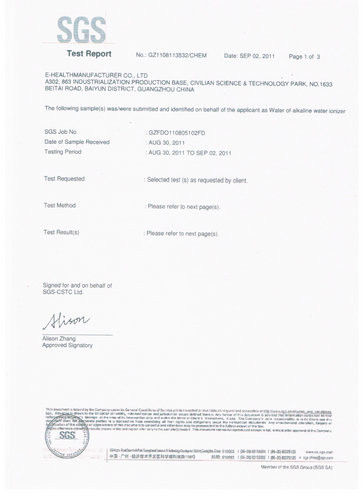
中国 EHM Group Ltd 認証
中国 EHM Group Ltd 認証
顧客の検討
過去 2 年間タイの水 ionizers のあなたの一手販売人でとして、私達は実際にあなたの強力な支持及び専門職業的業務を認めます。

—— タイからの Lim 氏

実際に私達の OEM アルカリ水水差しのすばらしい仕事をしました。 私達は過去の 3 年の協同の間にあなたの専門の援助を認めます。

—— トロント カナダからのデイヴィッド氏

EHM は私達をかなり良質及び価格の完全なヘルスケア プロダクト供給しました。 私はあなたの専門職業的業務及びより高い標準品質制御に感謝します。

—— ラゴス、ナイジェリアからの Faith 夫人

オンラインです
会社 ブログ
Reverse Osmosis Water Filter Flow Rates Explained
最新の会社ニュース Reverse Osmosis Water Filter Flow Rates Explained

When shopping for reverse osmosis (RO) water purifiers, specifications like 400 GPD or 600 GPD are often treated as gold standards for performance. However, many users experience confusion after installation: why do these "high-flow" systems still produce disappointingly slow water output? The reality is that GPD (Gallons Per Day) measures theoretical production capacity under ideal lab conditions, not direct faucet flow rate. Understanding this distinction is crucial for making informed purchasing decisions and optimizing household water usage.

What Does GPD Really Measure?

GPD quantifies the total volume of purified water an RO membrane can produce in 24 hours under standardized test conditions. This metric primarily reflects the membrane's filtration capacity. However, these "standard conditions" typically assume:

  • Water temperature of 77°F (25°C)
  • Inlet water pressure of 60 psi
  • Good quality feed water

In real-world home environments, these variables constantly fluctuate, often resulting in actual production rates significantly lower than advertised specifications.

Key Factors Affecting Real-World Performance

RO system efficiency depends on three physical factors, where any deficiency creates a domino effect on water production:

  • Water pressure: The RO process requires sufficient pressure to overcome osmotic pressure. Low household water pressure dramatically reduces water molecule penetration through the membrane.
  • Water temperature: Membrane permeability is highly temperature-dependent. Colder water increases viscosity and flow resistance. During winter, even a 600 GPD system may produce half or less of its summer output.
  • Feed water quality: Higher Total Dissolved Solids (TDS) content increases osmotic pressure. Poor water quality not only reduces filtration efficiency but also accelerates filter wear.
Production Capacity vs. Flow Rate: Critical Differences

Consumers frequently confuse two distinct concepts:

  • System capacity (GPD): Measures total daily water processing capability, determining how quickly the system replenishes storage tanks or maintains continuous supply.
  • Flow rate: Refers to immediate water discharge speed at the faucet, influenced by pipe diameter, faucet design, tank pressure (for tank systems), or booster pump performance (for tankless models). Even high-GPD membranes can deliver slow flow if plumbing components create bottlenecks.
Holistic System Design Considerations

RO systems comprise multiple components - pre-filters, tubing, flow restrictors, pumps, and faucets - working as an integrated unit. Tank-based systems use stored water to meet immediate demand, where perceived "speed" reflects tank pressure release. Tankless models rely on powerful booster pumps for real-time filtration. Therefore, selecting a high-GPD system doesn't guarantee faster faucet flow; it's more suitable for high-volume usage scenarios requiring rapid water replenishment. Most households should evaluate actual water needs, installation space, and local water conditions rather than chasing maximum GPD ratings.

パブの時間 : 2026-08-07 00:00:00 >> blog list
連絡先の詳細
EHM Group Ltd

コンタクトパーソン: Mr. Tim Wang

電話番号: 86-20-36548852

ファックス: 86-20-36548839

私達に直接お問い合わせを送信 (0 / 3000)

接触

住所: 建物1、Xiankeの最初道、Huadongの町、花都区、広州都市、広東省、中国の第3